Trace
UXL Design-a-thon Competition
Trace is a desktop plugin that rebuilds trust in digital art by verifying the creative process through action tracking. Built in 36 hours, placed in finals, and awarded Best User Research at UXL Laurier, our solution gives artists flexible control over transparency with a 2-tier system and seamless OS integration. I led user research, user flows, and UX/UI design prototyping for the creator experience.
Goals
As AI-generated art becomes increasingly sophisticated, digital artists face a growing crisis of authenticity. Including insights from Reddit discussions, many creatives find their work mistakenly flagged as AI-generated, while AI art is often passed off as original.
In an era where AI blurs the lines of artistic authorship, we asked:
How might we use technology to rebuild trust and deepen connections between digital artists and global audiences in an era where authenticity is constantly in question?
What I've done far
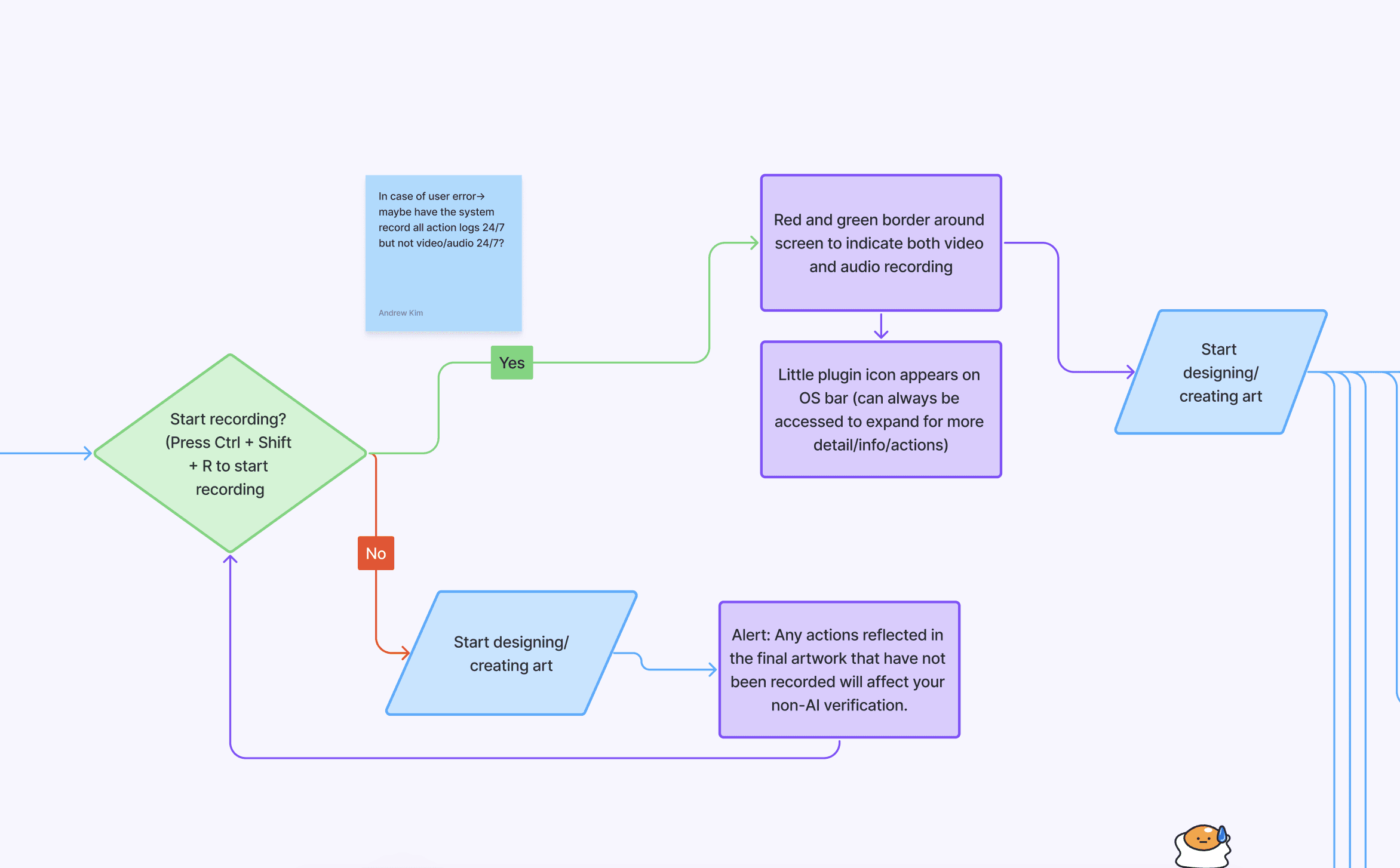
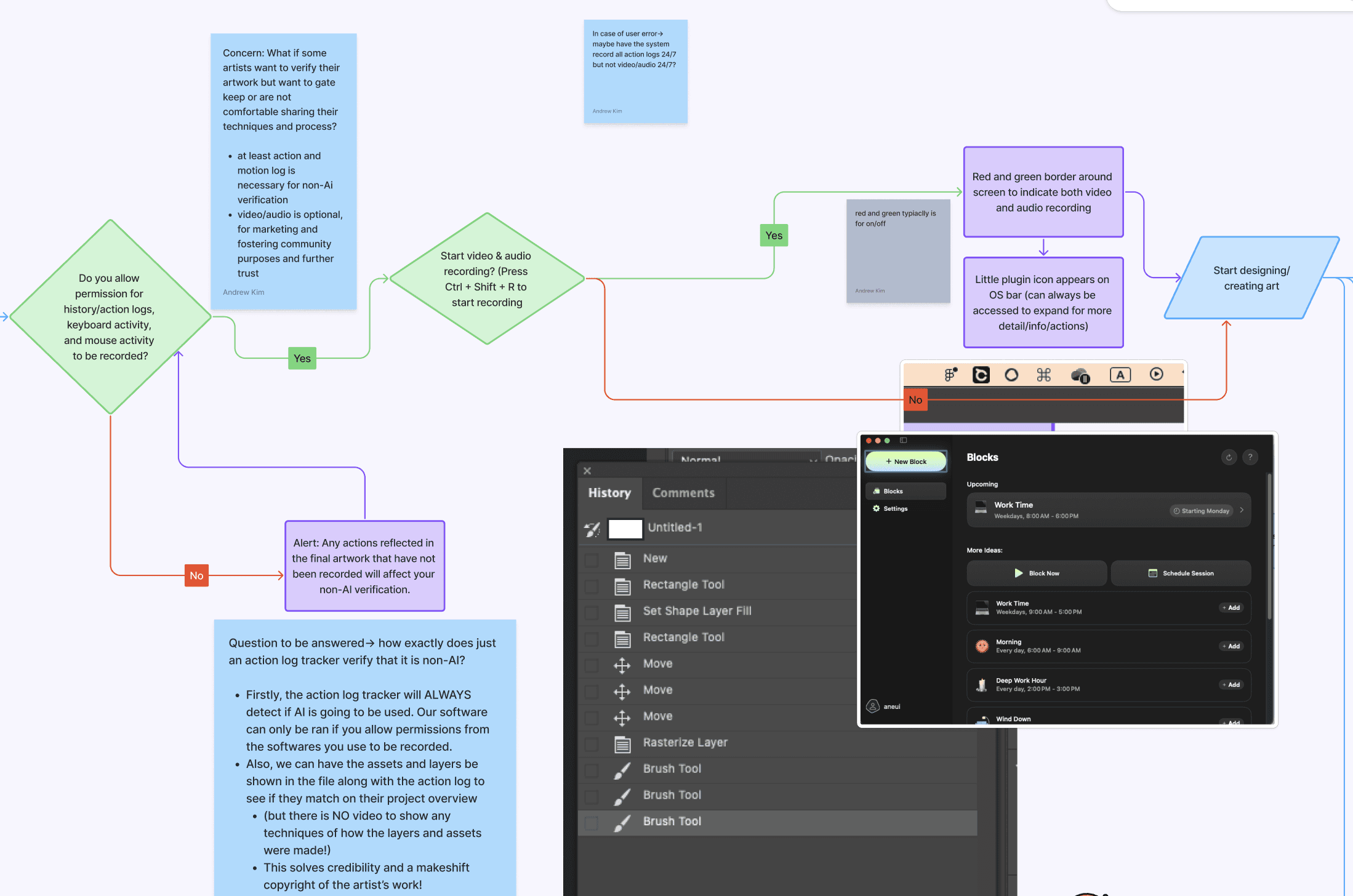
We designed a desktop plugin that passively tracks creative actions, such as cursor movements and tool use to verify artistic authenticity without disrupting workflow. Artists choose their preferred level of transparency through a 2-tier system (screen recording and action tracking), balancing proof with privacy.
Currently doing:
GOALS & CHALLENGES
Appnovation’s marketing team set out to re-energize our brand presence and attract new leads in high-value industries like healthcare and pharma, while reinforcing our expertise in AI-enabled digital solutions.
Our goals:
Build awareness in healthcare and pharma through a three-phase campaign (Awareness → Education → Consideration/Conversion).
Strengthen AI-focused brand storytelling tied to our new tagline: “Fueled by experience. Powered by AI.”
Enhance visual storytelling by integrating more motion and video, while maintaining consistency within the brand system.
Prepare for a future website refresh (migrating from Drupal to Builder.io), while optimizing visuals and content on the existing platform
STRATEGY & EXECUTION
We designed a desktop plugin that passively tracks creative actions, such as cursor movements and tool use to verify artistic authenticity without disrupting workflow. Artists choose their preferred level of transparency through a 2-tier system (screen recording and action tracking), balancing proof with privacy.
MY NEXT STEPS
Real-Time Action Tracker
Continuously logs creative actions like clicks, keystrokes, and tool usage with timestamps. Screen recording is optional.
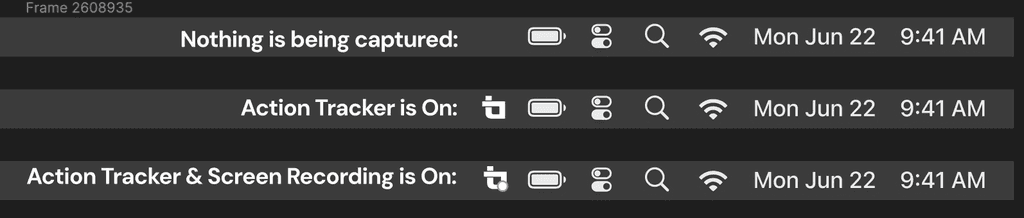
Seamless OS Bar Access
An always-on desktop icon lets creators track real-time status, with changing icons representing different states.
Intuitive Recording Controls
Dropdown menu lets users manage recordings, mark timestamps, and adjust settings mid-creation.
DESIGN PROCESS
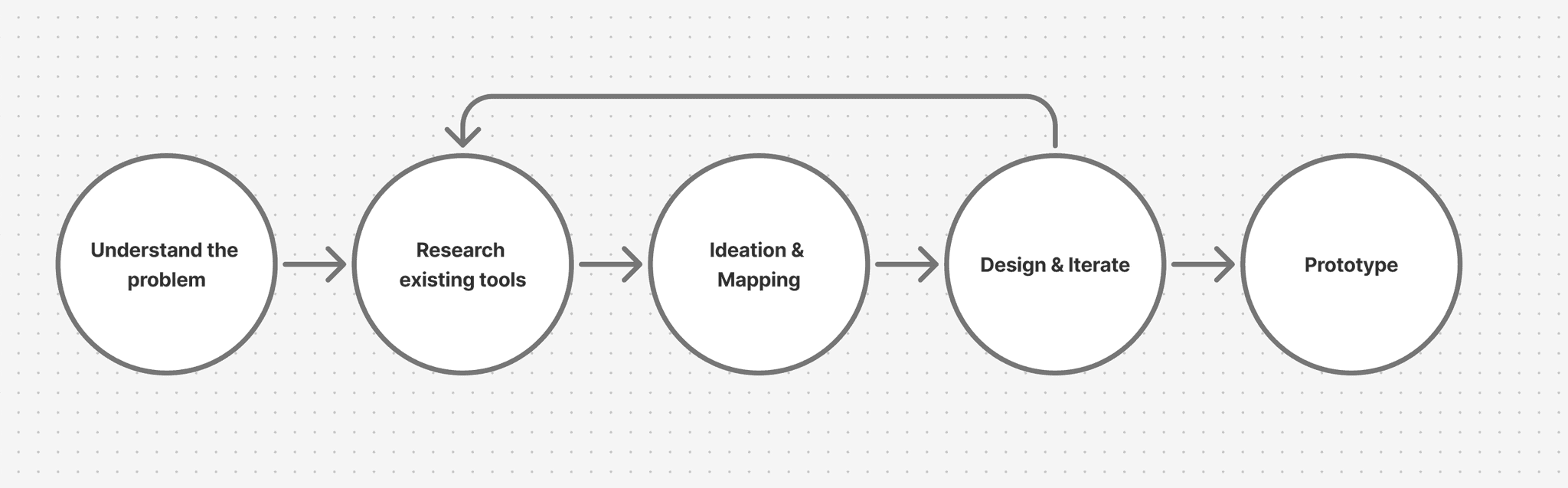
My design process started with secondary research and community insights to deeply understand the trust gap in digital art. I mapped user flows, ideated flexible verification features, and prototyped a seamless tool that integrates directly into artists’ workflows. If given more time, my next step would be to test the prototype with real digital artists to validate usability and refine the system further.
RESEARCH & IDEATION
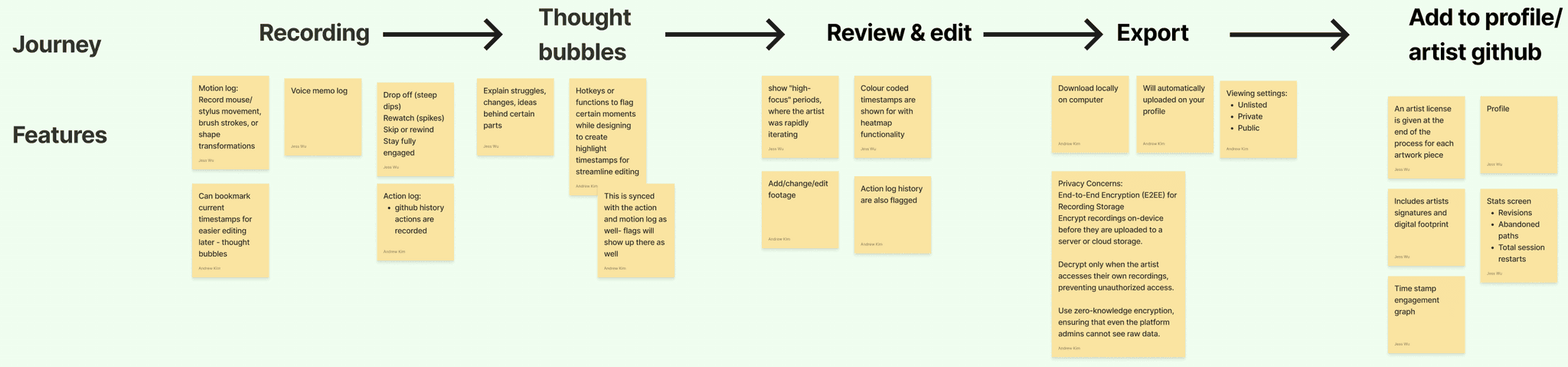
Our research revealed a growing trust issue in digital art: 43% of people in our survey couldn’t confidently distinguish AI-generated art from human-made work, leading to real harm for artists whose creations are misidentified or dismissed. To address this, we brainstormed features that could capture and verify the creative process without disrupting the artist’s flow.
I mapped these ideas onto a journey map to visualize how verification might fit naturally into an artist’s workflow. Drawing from tools I use daily, like Photoshop’s History panel, Blender’s Scene Collection, and passive screen recording software, I aimed to design a system that felt familiar, seamless, and respectful of artist autonomy.
ITERATION
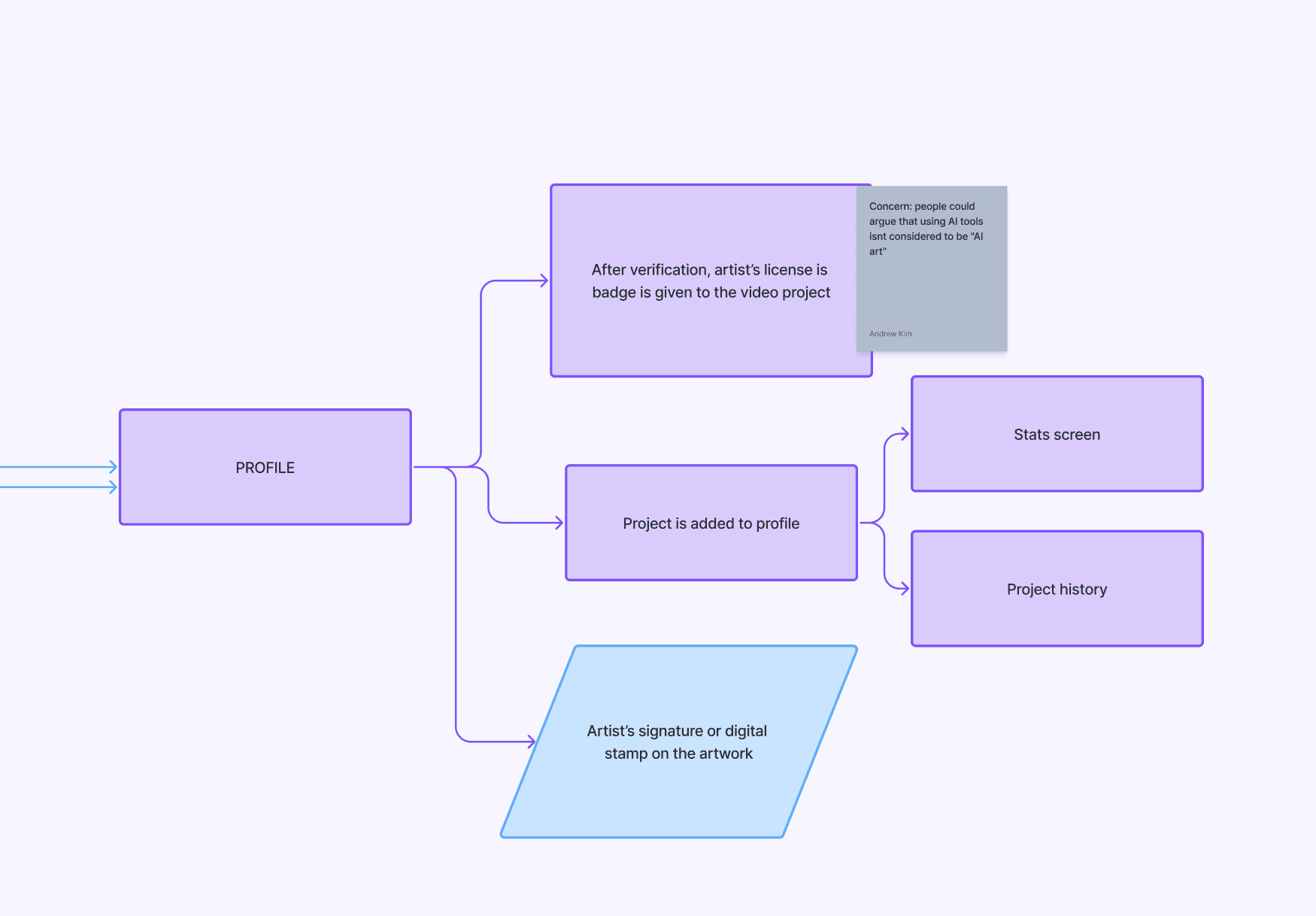
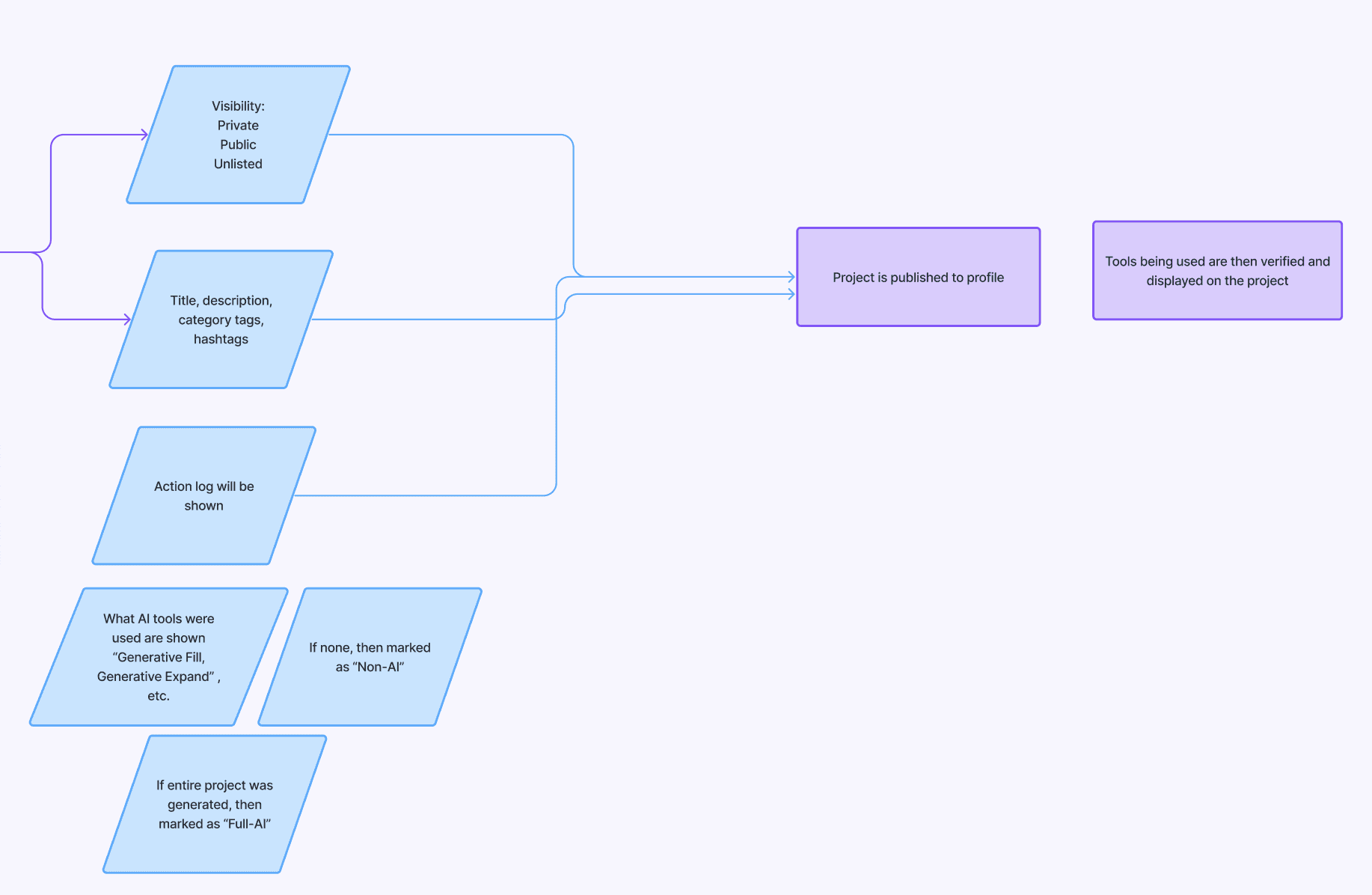
I mapped out the artist’s journey and found early concepts too rigid for real-world use. I refined the flow with optional screen recording and tiered transparency, giving artists more control over how their work is verified.
REFLECTION
This project taught me the importance of thoughtful user flows and exploring edge cases early on. What started as a simple verification badge evolved into a more nuanced, tiered transparency system after realizing one-size-fits-all solutions wouldn’t work. I also learned to focus on what truly matters; shifting from screen recording to action tracking as the core of our concept. Finally, mentorship sessions with industry professionals reminded me that seeking feedback can reveal blind spots and push a concept closer to real-world impact.